DEXA Body Scans Cincinnati
The gold standard for tracking fat, muscle, and bone health
A DEXA body scan gives you a more complete view of your body composition than weight, BMI, or a standard bathroom scale can provide.
Using low-dose dual-energy X-ray technology, a DEXA scan can measure your total body fat, lean muscle mass, fat distribution, visceral fat, and bone mineral measurements. Instead of relying on estimates, you receive objective information that can help you understand where you are today and track meaningful changes over time.
At Inertia Medical, we provide DEXA body scans near Cincinnati for people who want clearer insight into their health, fitness progress, weight-management results, muscle development, or long-term wellness.
We don’t simply hand you a report filled with numbers. We help you understand what those numbers mean and how they may relate to your goals.
Our office is located in Fairfield, serving patients throughout Cincinnati, West Chester, Liberty Township, Mason, Hamilton, and surrounding communities.
What Is a DEXA Body Composition Scan?
DEXA stands for dual-energy X-ray absorptiometry. You may also see it written as DXA.
The technology uses two very low-energy X-ray beams to distinguish between bone, lean tissue, and fat tissue. This allows the scanner to create a detailed picture of your body composition.
A body composition DEXA scan may report:
- Total body fat percentage
- Total fat mass
- Lean body mass
- Regional muscle and fat measurements
- Visceral adipose tissue
- Android-to-gynoid fat distribution
- Differences between the left and right sides of the body
- Bone mineral content
- Changes between repeat scans
DEXA technology is also used in medical settings for diagnostic bone-density testing. However, a wellness-focused whole-body composition scan is not necessarily the same as a physician-ordered diagnostic osteoporosis evaluation of the hips and spine.
We’ll help you understand what your scan measures and whether you should speak with your primary care provider or another medical specialist about additional testing.
What Can a DEXA Body Scan Tell You?
A DEXA scan helps replace assumptions with measurable data.
Two people can weigh the same and have very different percentages of fat, muscle, and visceral fat. The same person may also maintain a similar body weight while losing fat and gaining muscle.
That is why scale weight alone often provides an incomplete picture.
Body Fat Percentage
Your body fat percentage represents how much of your total body mass is made up of fat tissue.
DEXA can provide a more detailed assessment than common consumer methods, such as:
- Bathroom scales
- Handheld body-fat devices
- Skinfold measurements
- BMI calculators
- Waist measurements alone
No body-composition method is completely free from measurement variability. However, DEXA is widely used as a reference method in clinical, athletic, and research environments.
Lean Muscle Mass
Lean mass includes muscle and other non-fat, non-bone tissue.
Tracking lean mass can be especially helpful if you are:
- Starting a strength-training program
- Trying to gain muscle
- Losing weight
- Using a medically supervised weight-management program
- Receiving hormone optimization treatment
- Recovering from reduced activity
- Focused on maintaining strength as you age
Weight loss is not always synonymous with improved body composition. A person can lose both fat and muscle during a calorie deficit. DEXA allows us to evaluate whether your plan is supporting fat reduction while preserving as much lean mass as possible.
Visceral Fat
Visceral adipose tissue is fat stored deeper within the abdominal cavity around internal organs.
It is different from subcutaneous fat, which sits underneath the skin. Higher levels of visceral fat are associated with increased cardiometabolic risk, although a DEXA result should be considered alongside blood pressure, laboratory findings, family history, lifestyle, and your broader medical profile.
A visceral-fat measurement does not diagnose diabetes, cardiovascular disease, or another health condition. It can, however, provide another useful data point when building a proactive health strategy.
Regional Body Composition
DEXA can show how fat and lean tissue are distributed across different areas of your body, including your:
- Arms
- Legs
- Trunk
- Abdominal region
- Hips
Regional data can help identify meaningful patterns that a total body-fat number might miss.
It may also help athletes and active adults compare muscle development between the left and right sides of the body. Differences do not automatically mean that an injury or medical problem is present, but they may offer useful context for training and performance planning.
Bone Mineral Measurements
DEXA technology can evaluate bone mineral content and related bone measurements.
However, patients should understand the distinction between a whole-body composition scan and a diagnostic bone-density study. A formal osteoporosis evaluation generally follows specific clinical protocols and often focuses on the hips and lumbar spine.
Cleveland Clinic notes that diagnostic DXA testing is used to measure bone density, evaluate bone strength, and help assess osteoporosis and fracture risk.
When a body-composition scan raises a potential concern, we may recommend discussing it with your primary care provider or obtaining an appropriate diagnostic study.
Who May Benefit From a DEXA Body Scan?
You do not need to be an elite athlete to benefit from understanding your body composition.
A DEXA scan may be useful for people who want to:
- Establish an objective health baseline
- Track fat loss more accurately
- Protect muscle during weight loss
- Measure progress from strength training
- Monitor changes during hormone optimization
- Better understand visceral fat
- Evaluate changes that are not visible on the scale
- Support healthy aging and longevity goals
- Compare results before and after a structured wellness program
- Make data-informed nutrition and exercise decisions
DEXA data can be valuable, but more information is not automatically better. The scan is most useful when the results connect to a realistic plan.
We take the time to understand why you are getting scanned, what you hope to learn, and how the information can support your next steps.
DEXA Scans for Medical Weight Loss
A traditional scale tells you whether your total weight has changed. It does not tell you what type of tissue you lost.
During weight loss, the goal is generally to reduce excess fat while protect lean muscle during weight loss. This becomes especially important during substantial calorie reduction or treatment with weight-management medications.
A DEXA scan can help you evaluate:
- How much fat mass has changed
- Whether lean mass is being maintained
- Whether visceral fat is decreasing
- How your body composition is changing by region
- Whether nutrition or resistance training may need more attention
Your scan does not replace laboratory testing, nutrition guidance, or clinical follow-up. It adds another layer of objective information to your broader treatment plan.
For patients participating in our medical weight-loss program, repeat DEXA scans may help us evaluate progress beyond pounds alone.

DEXA Scans for Muscle Growth and Fitness
Strength training can improve your body even when the scale does not move.
You might lose several pounds of fat while gaining lean tissue, leaving your total weight relatively unchanged. A standard scale can make that progress difficult to recognize.
DEXA testing may help active adults, athletes, and fitness-focused patients:
- Establish a starting baseline
- Track total lean mass
- Compare arms and legs
- Evaluate regional development
- Measure fat reduction during a training phase
- Assess whether a nutrition plan supports muscle retention
- Set more informed performance goals
We recommend focusing on long-term trends rather than becoming overly fixated on a single number.
Body composition is one part of your health. Strength, mobility, energy, metabolic markers, cardiovascular fitness, sleep, and quality of life also matter.
DEXA Scans and Hormone Optimization
Hormones can influence energy, recovery, muscle maintenance, fat distribution, and bone health. However, symptoms and body-composition changes should never be evaluated through a scan alone.
For patients receiving testosterone replacement therapy or women’s hormone replacement therapy, DEXA may provide additional insight into changes in lean mass, fat mass, and overall body composition.
Inertia Medical’s current TRT program includes complimentary DEXA body-composition scans within certain membership benefits, helping patients monitor body composition during TRT alongside laboratory testing and provider follow-up.
DEXA does not determine whether you need hormone therapy. Hormone treatment decisions should be based on symptoms, medical history, appropriate laboratory testing, examination, risk factors, and a personalized discussion with a qualified provider.

DEXA Scan vs. Other Body Composition Tests
| Measurement Method | What It Provides | Primary Limitations |
|---|---|---|
| Standard scale | Total body weight | Cannot distinguish fat, muscle, water, or bone |
| BMI | Weight relative to height | Does not directly measure body composition |
| Smart scale or BIA | Estimated fat, muscle, and water | Results can shift with hydration, meals, exercise, and device quality |
| Skinfold testing | Estimate based on subcutaneous fat | Depends heavily on tester technique and prediction equations |
| Bod Pod | Estimated body composition through air displacement | Does not provide the same regional detail or direct bone measurements |
| DEXA body scan | Fat, lean tissue, regional composition, visceral fat, and bone measurements | Uses low-dose radiation and results may vary slightly between equipment and testing conditions |
What to Expect During a DEXA Scan
A DEXA body composition appointment is straightforward and noninvasive.
1. Pre-Scan Preparation
We’ll provide instructions before your appointment so your testing conditions are as consistent as possible.
Depending on your circumstances, preparation may include:
- Staying normally hydrated
- Avoiding a large meal immediately before the scan
- Avoiding strenuous exercise shortly before testing
- Wearing comfortable clothing without significant metal
- Removing jewelry, belts, or other metal items
- Informing us about recent contrast imaging studies
- Letting us know if you are or may be pregnant
Consistency is especially important when comparing multiple scans. Hydration, food intake, recent exercise, and timing can influence body-composition measurements.
2. The Scan
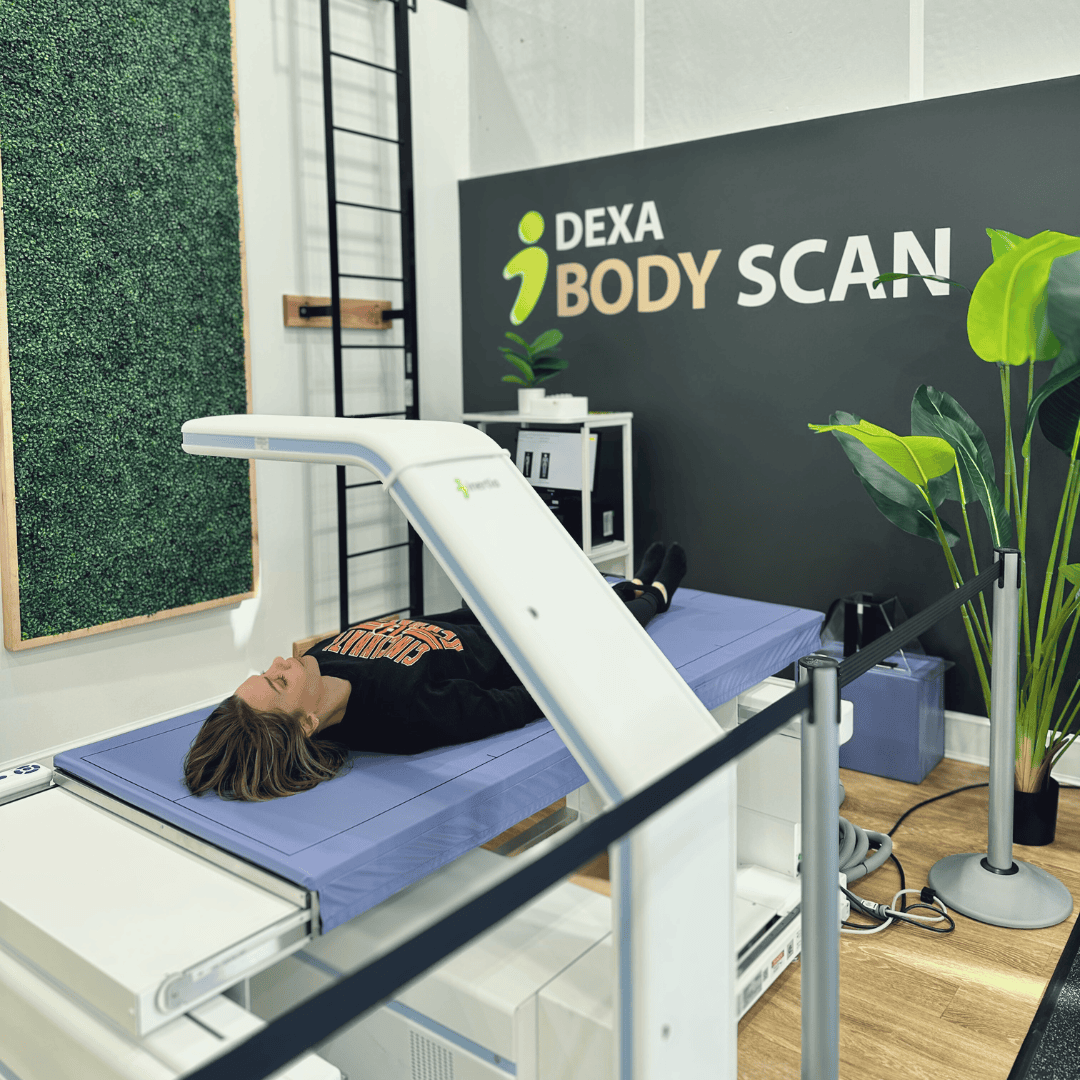
You will lie still on a padded scanning table while the scanner passes over your body.
The scan is painless. You are not enclosed in a tube, and the equipment does not typically create the confined feeling associated with an MRI.
3. Results
Your report may include total and regional measurements of:
- Body fat
- Lean mass
- Visceral fat
- Fat distribution
- Bone mineral content
- Right-to-left differences
At Inertia Medical, a provider review is included with the body-composition scan. We help you understand the report, identify the measurements most relevant to your goals, and discuss appropriate next steps.
How Long Does a DEXA Body Scan Take?
The scan itself is generally brief, although your total appointment time may be longer to allow for preparation, positioning, reviewing information, and discussing your results.
The exact duration can vary based on the scan protocol and individual circumstances.
You should remain still during the scan so the system can obtain a clear and consistent measurement.


Is a DEXA Scan Safe?
DEXA uses a low level of ionizing radiation.
Cleveland Clinic reports that DXA testing involves very little risk for most people and is painless, but it should generally be avoided during pregnancy.
Before your appointment, tell us if:
- You are pregnant
- You may be pregnant
- You recently had an imaging test involving contrast material
- You have implanted devices or hardware
- You have mobility limitations that could affect positioning
- You have questions about radiation exposure
We will help determine whether the scan is appropriate or whether additional guidance is needed.
How Often Should You Get a DEXA Body Scan?
The right testing schedule depends on your goals and how quickly meaningful changes are expected.
For many people, repeating a scan too soon creates noise rather than useful insight. Body-composition changes require time.
Repeat scans may be considered:
- Before and after a structured weight-loss phase
- During a longer medical weight-management program
- After several months of consistent strength training
- While monitoring significant changes in muscle mass
- As part of an ongoing hormone optimization program
- At planned intervals during a longevity or wellness strategy
Your provider can help you choose a schedule that produces useful comparisons without unnecessary testing.
For repeat scans, we recommend recreating similar conditions whenever possible. Try to schedule at a similar time of day and maintain similar hydration, food, and exercise conditions.

How Much Does a DEXA Body Scan Cost in Cincinnati?
Inertia Medical currently lists the following transparent pricing:
| DEXA Service | Price |
|---|---|
| Individual body composition scan | $149 |
| Provider results review | Included |
| FitTrace app access | Included |
| Pre-scan instructions | Included |
| Post-scan summary | Included |
| Six-scan package | $594, or $99 per scan |
| Twelve-scan package | $960, or $80 per scan |
DEXA scans may also be included in select Inertia Medical memberships. Pricing and package availability may change, so we recommend confirming current information when scheduling.
Why Choose Inertia Medical for a DEXA Scan Near Cincinnati?
A DEXA machine can generate data. The more important question is what happens after the scan.
Our approach is centered on helping you understand the information and connect it to your health goals.
Patients choose us because we offer:
- Detailed body-composition measurements
- Visceral-fat analysis
- Lean-mass tracking
- Clear, upfront pricing
- An included provider review
- FitTrace access for tracking results
- Integration with weight-management and hormone programs
- Personalized guidance rather than a generic printout
- Convenient access near Cincinnati, Fairfield, West Chester, and Liberty Township
We look at your scan as part of a larger picture.
Depending on your goals, that picture may also include your symptoms, health history, comprehensive blood work, nutrition, activity level, sleep, medications, hormones, and long-term priorities.
Our goal is not to give you more numbers to worry about. It is to give you better information for making confident decisions.
Frequently Asked Questions About DEXA Body Scans
A whole-body DEXA scan can measure total body fat, lean mass, regional fat and muscle distribution, visceral fat, and bone mineral measurements. The exact data included may depend on the equipment and scan protocol.
DEXA generally provides more detailed and clinically useful body-composition information than a consumer smart scale. Smart scales typically use bioelectrical impedance and can be influenced by hydration, meals, exercise, and device algorithms.
Yes. A body-composition DEXA scan can estimate visceral adipose tissue in the abdominal region. Visceral fat is one component of cardiometabolic health, but the result should be interpreted alongside other health information.
DEXA technology is used to diagnose osteopenia and osteoporosis, but a whole-body wellness scan may not be equivalent to a physician-ordered diagnostic hip-and-spine bone-density test. Patients concerned about osteoporosis should discuss appropriate diagnostic screening with a medical provider.
No. A DEXA scan is noninvasive and painless. You lie still on a padded table while the scanning arm moves over your body.
No. You are not placed inside a tunnel. The scanning arm passes over an open table, making the experience generally comfortable for people who dislike enclosed spaces.
Inertia Medical offers DEXA body-composition scans that can be scheduled directly. A referral may be necessary for certain diagnostic studies performed through hospitals or imaging centers.
DEXA uses a small amount of ionizing radiation and is generally avoided during pregnancy. Tell our team if you are pregnant or believe you may be pregnant before scheduling.
Yes. DEXA can show whether changes in total weight are coming primarily from fat or lean tissue. It may also help track visceral fat and regional body-composition changes.
Yes. DEXA can measure total and regional lean mass, allowing you to compare changes in the arms, legs, and trunk over time.
Follow the instructions provided by our team. You may be advised to arrive normally hydrated, avoid a large meal or intense workout shortly before the scan, and wear clothing without metal. Consistent preparation improves repeat-scan comparisons.
Testing frequency depends on your goals. Many patients wait several months between scans so there is enough time for meaningful body-composition changes to occur.
An individual body-composition scan is currently listed at $149 and includes a provider review and FitTrace app access. Six-scan and twelve-scan packages are also available. Confirm current pricing when scheduling.
Inertia Medical provides DEXA body-composition scans at 6200 Union Centre Boulevard in Fairfield, serving Cincinnati, West Chester, Liberty Township, Mason, Hamilton, and surrounding areas.

Schedule a DEXA Body Scan in Cincinnati
Schedule a DEXA scan with our team and take a more informed approach to your health, strength, and long-term progress.
Inertia Medical is located at:
6200 Union Centre Boulevard
Fairfield, Ohio 45014
We serve patients throughout Cincinnati, Fairfield, West Chester, Liberty Township, Mason, Hamilton, and nearby communities.
Call or text 513-570-4464 or schedule your scan online.